Pergola Lighting: How to Create an Outdoor Room After Dark
Some links may earn Veluce a commission at no extra cost to you. Purchases, delivery and returns are handled by the retailer. Affiliate disclosure.
Quick Takeaways
- A pergola is not a roof — it’s a frame for light
- Pergola lighting is not about visibility — it is about defining how people inhabit space after sunset
- Layer three types: ambient (LED strips), accent (string lights), and task (spotlights)
- Warm white (2700K-3000K) creates inviting atmosphere — cool white feels clinical
- Hide light sources whenever possible; the structure should glow, not the fixtures
The Frame That Glows
A pergola during the day is architecture. A pergola at night is atmosphere.
Unlike a solid roof, a pergola doesn’t block light — it frames it. The beams become channels for illumination. The open slats create rhythm. The structure itself becomes the light fixture.
This is the fundamental insight of pergola lighting: you aren’t lighting a room. You’re lighting a frame. And the most beautiful frames are those where the light source remains invisible — only the glow remains.
The Three Layers of Pergola Lighting
Most pergolas fail at night because they rely on one light source. A single string light draped across the beams creates a festive look but uneven illumination. A single floodlight washes out the space.
The solution is layering.
| Layer | Purpose | Typical Fixture |
|---|---|---|
| Ambient | Overall illumination, defines the space | LED strips in beams, string lights |
| Accent | Human scale, warmth, spatial intimacy | Draped string lights, pendant lights |
| Task | Specific activities (dining, cooking, reading) | Spotlights, directional lights |
When these three layers work together, the pergola stops feeling like a structure with lights attached. It becomes an outdoor room — complete, intentional, and inviting.
Layer 1: Integrated LED Strips (The Backbone)
The most sophisticated pergola lighting begins with linear LED strips integrated directly into the structure.
Recess them into the underside of beams. Tuck them into channels along the perimeter. Hide them along the top of support posts. The goal is invisibility — the structure glows, not the fixtures.
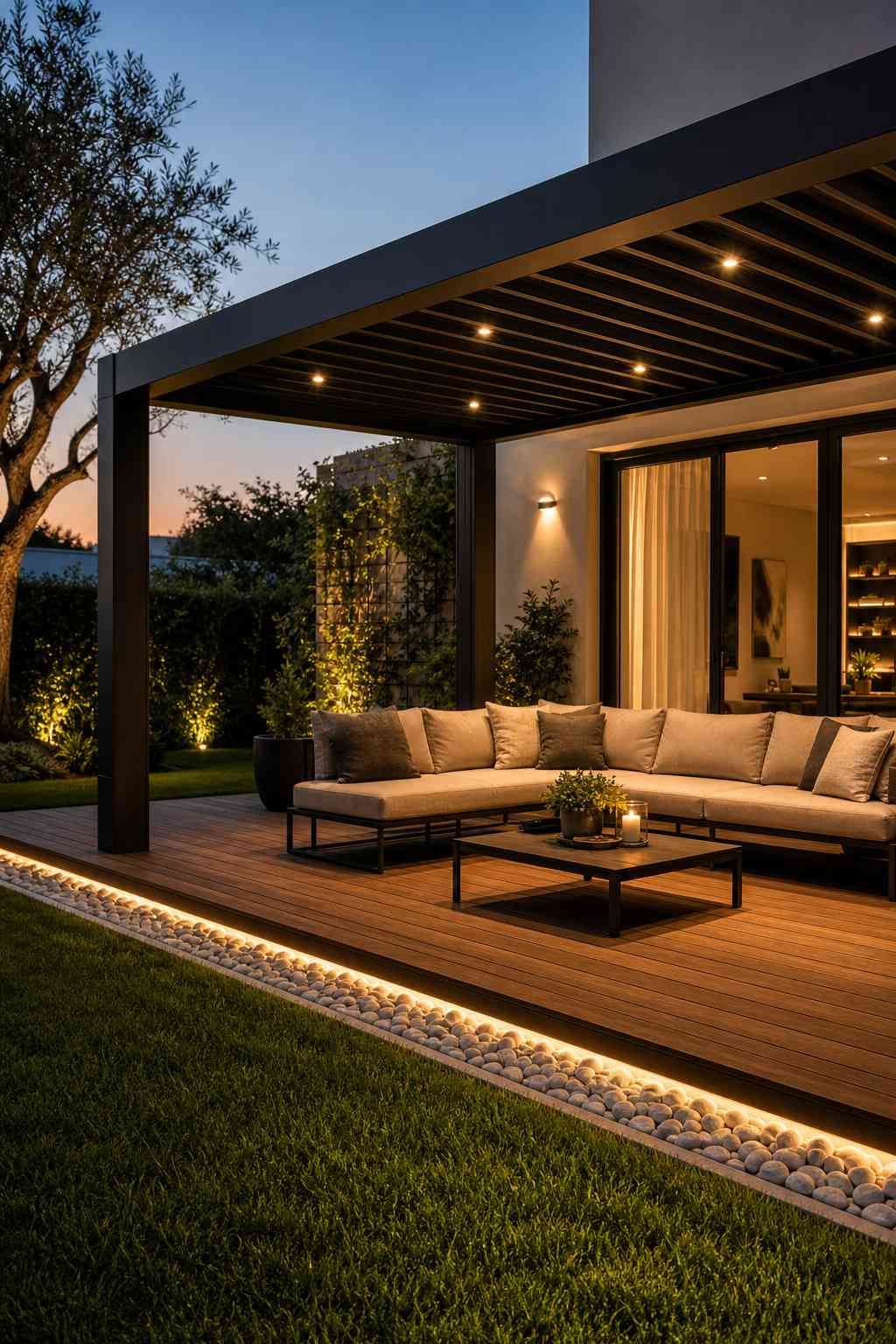
Best practices for LED strip installation:
- Use warm white (2700K-3000K) — cool white destroys the atmosphere
- Choose COB (chip-on-board) strips for continuous light with no visible dots
- Use aluminum channels with diffusers to prevent hotspotting. This ensures the light reads as a continuous architectural line rather than discrete LED points.
- Ensure IP65 waterproof rating for outdoor durability
For permanent pergola lighting (hardwired, electrician required):
→ Shop 220V COB LED Strip
For DIY installation (plugs into outdoor outlet):
→ Shop 12V/24V DC COB LED Strip
Layer 2: String Lights (The Human Scale)
String lights are the quickest way to transform a pergola from structure to sanctuary. They add warmth, texture, and a sense of occasion.
Drape them in a zigzag pattern across the beams for a canopy effect. Run them along the perimeter for a defined edge. Hang them directly over a dining table for focused illumination.
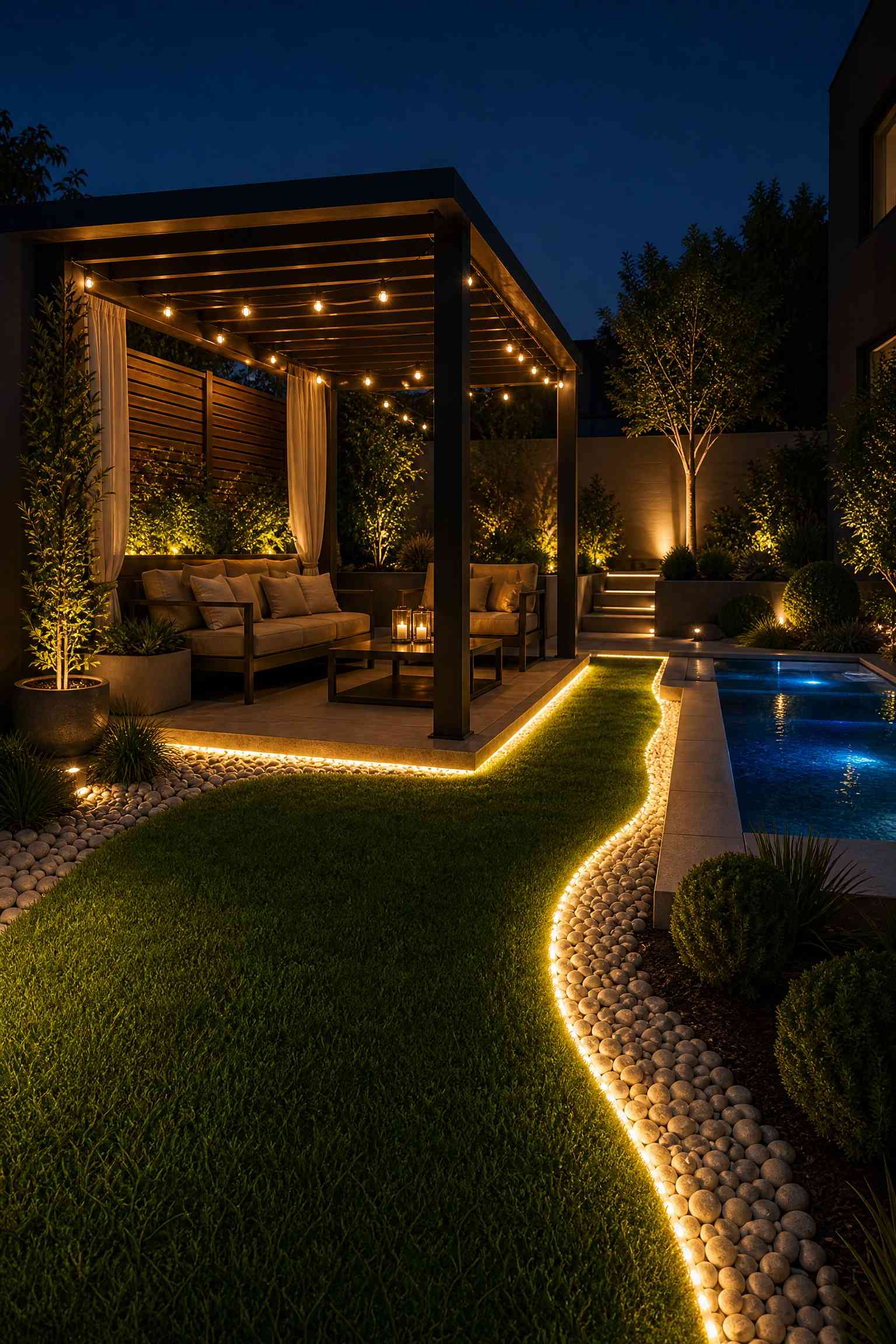
String light guidelines:
- Choose warm white (2700K) bulbs — Edison-style or globe
- Allow slight sag in the wire for a relaxed, inviting look
- Space bulbs evenly for consistent rhythm
→ Shop Solar String Lights for Pergolas
Layer 3: Uplighting (The Enclosure)
A pergola feels exposed without surrounding illumination. Uplighting on nearby trees, shrubs, and walls creates a sense of enclosure — softening the transition between structure and garden.
Where to place uplights:
- At the base of trees flanking the pergola
- Behind large shrubs to create a backdrop of light
- Against nearby walls to define the room’s edge
→ Shop Solar Spotlights for Uplighting
Dining Under the Pergola
A dining table requires functional illumination. LED strips integrated into beams directly above the table provide even, shadow-free light.
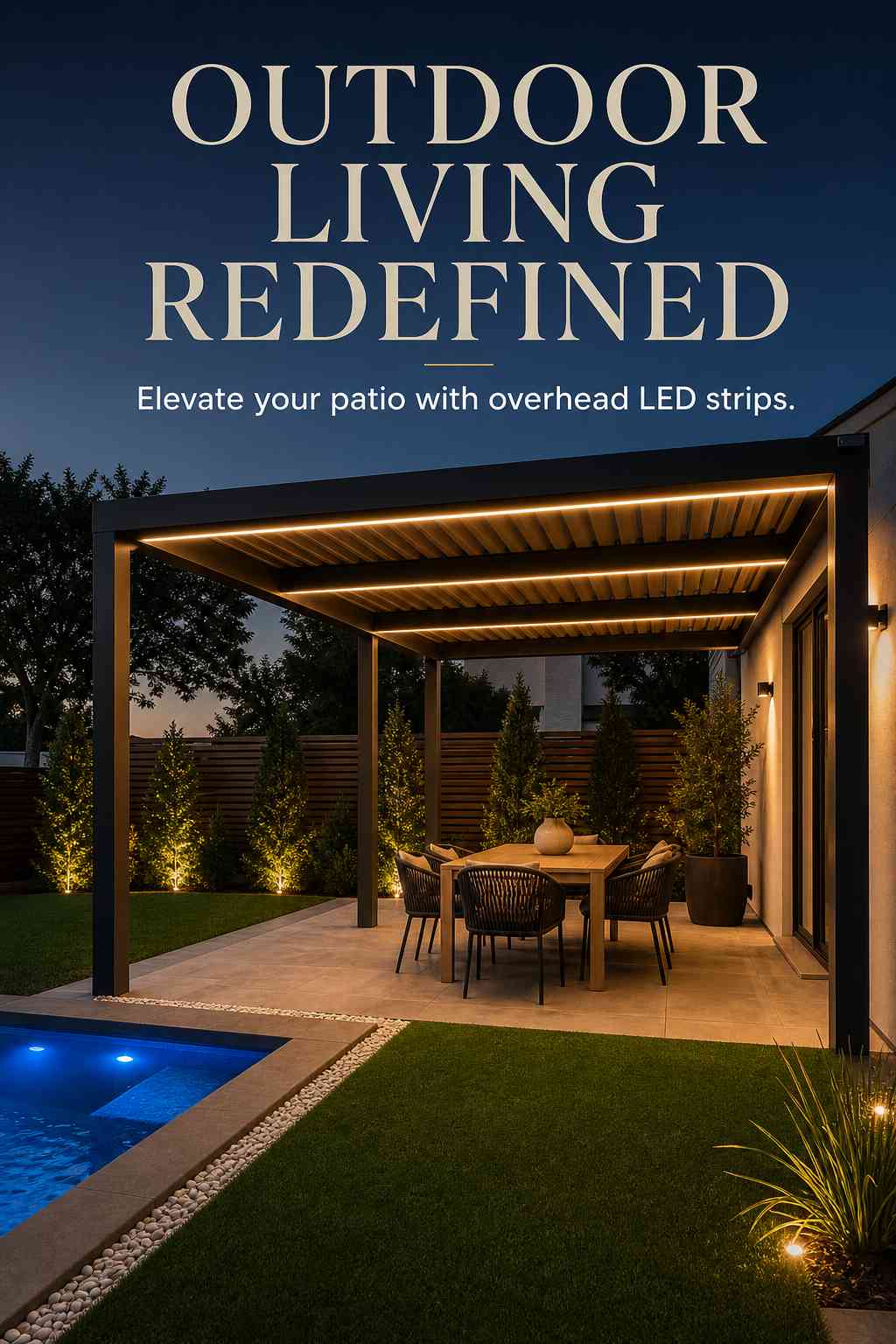
Dining lighting principles:
- Light the table surface, not the surrounding floor
- Keep fixtures high enough to avoid glare
- Combine ambient strips with a dedicated pendant or string light over the table
Hot Tub and Spa Pergolas
Pergolas over hot tubs or spas need lighting that enhances relaxation without glare. Warm, low-level illumination creates a sanctuary.
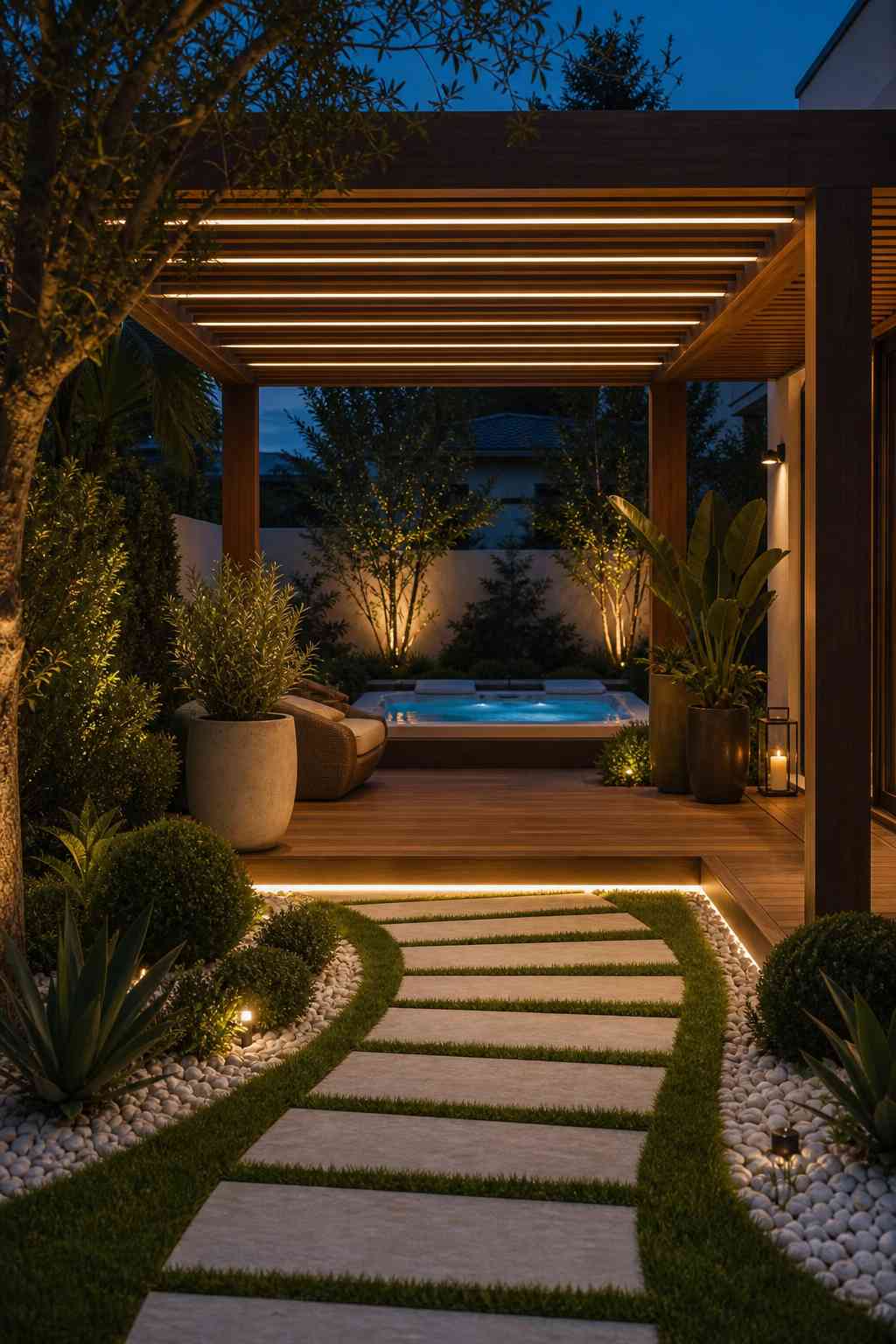
Spa lighting tips:
- Use step lights on stairs and transitions (safety first)
- Install LED strips along the deck perimeter for a floating effect
- Add uplighting on surrounding plants for privacy and depth
→ Shop Solar Step Lights for Stairs
Fire Pit and Lounge Areas
For lounging areas, prioritize warmth and intimacy over brightness. Fire pits provide natural focal light. The fire becomes the lowest and most natural light source in the hierarchy — everything else is layered around it.
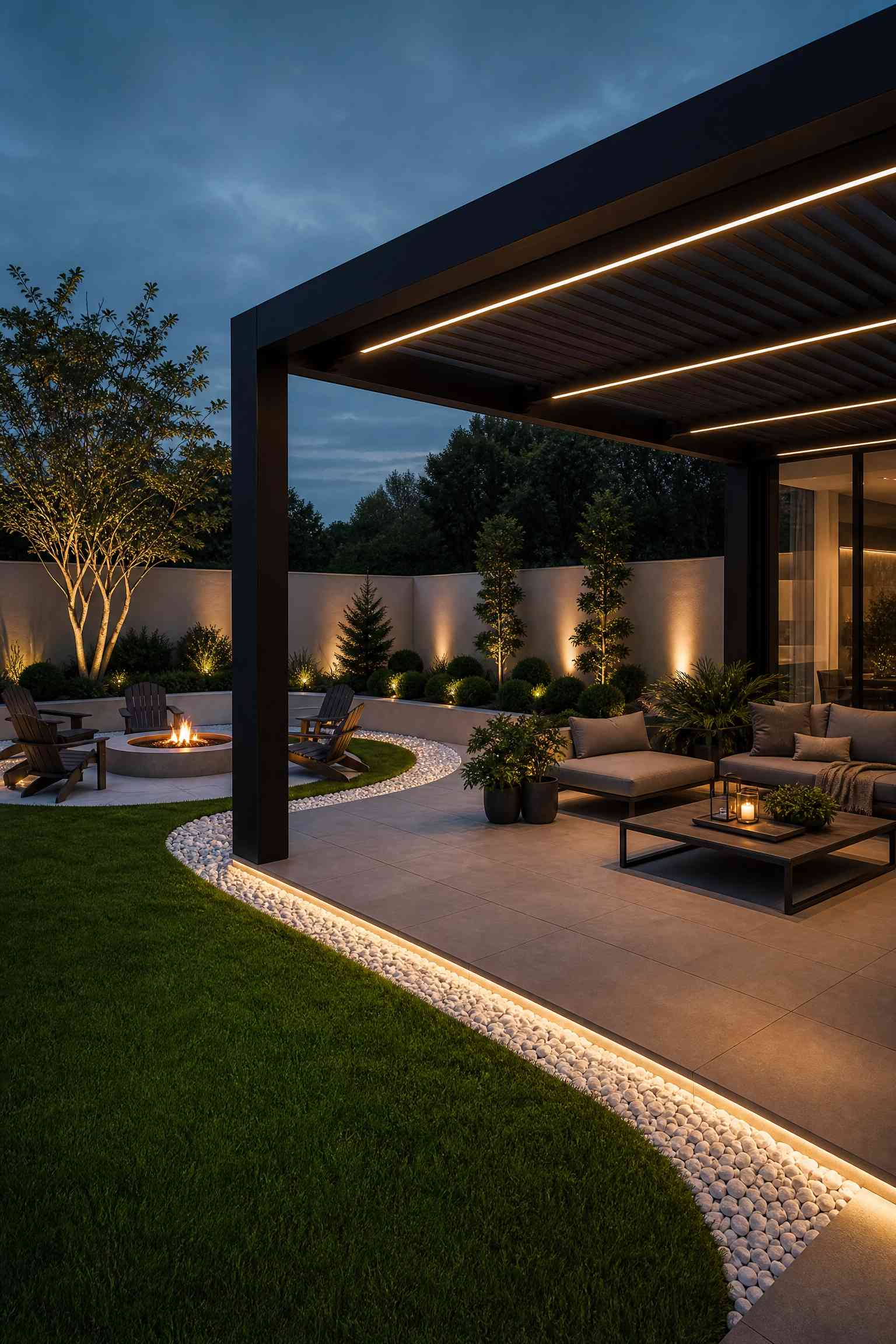
Lounge lighting principles:
- Let the fire pit provide the primary warm glow
- Use string lights for character and canopy
- Add path lighting to guide movement to and from the area
→ Shop Solar Inground Lights for Pathways
Color Temperature: The Most Important Decision
| Temperature | Effect | Verdict |
|---|---|---|
| 2700K (warm white) | Inviting, intimate, residential | ✅ Best for pergolas |
| 3000K (soft white) | Balanced, natural | ✅ Acceptable |
| 4000K+ (cool white) | Clinical, harsh, institutional | ❌ Avoid |
Most cheap outdoor lights use cool white LEDs because they appear brighter. But brighter isn’t better. Warm white creates the golden glow that makes pergolas feel like evening sanctuaries, not operating rooms.
Solar vs. Low-Voltage vs. Line Voltage
Solar:
- Pros: No wiring, no electrician, zero operating cost
- Cons: Less bright, dependent on sun exposure
- Best for: String lights, spotlights, accent lighting (requires strong sunlight exposure)
Low-voltage (12V/24V):
- Pros: Brighter, reliable, DIY-friendly
- Cons: Requires transformer and outlet access
- Best for: LED strips, permanent installations
Line voltage (220V):
- Pros: Maximum brightness, longest runs
- Cons: Requires electrician, higher cost
- Best for: Commercial, integrated fixtures, high-efficiency long runs
Solar is suitable for most pergola accent applications where wiring is impractical. For permanent LED strip installations, low-voltage (plug-in transformer or hardwired systems) are the standard.
Common Mistakes to Avoid
- Cool white temperature — ruins the evening atmosphere
- Visible fixtures — the magic is in the glow, not the source
- Single light source — one fixture creates harsh shadows and uneven illumination
- Over-lighting — a glowing runway feels institutional, not inviting
- Ignoring the surrounding landscape — a pergola needs the garden to feel complete
Installation Quick Start
- Plan your layers: Ambient (LED strips) + Accent (string lights) + Task (spotlights)
- Choose warm white (2700K-3000K) for all fixtures
- Install LED strips into beams or along deck edges using aluminum channels with diffusers
- Drape string lights in a zigzag pattern across the pergola
- Position spotlights at the base of surrounding trees and shrubs
- Test at night — adjust spacing, angles, and brightness
- The structure should glow. The fixtures should recede.
Maintenance
- Clean solar panels monthly — dust reduces charging efficiency
- Check LED strips for debris or water damage
- Replace string light bulbs as needed (keep spares)
- Adjust uplight angles as trees and shrubs grow
Frequently Asked Questions
What’s the best lighting for a pergola?
A layered approach works best: integrated LED strips in the beams for ambient glow, string lights for human-scale warmth, and uplighting on surrounding plants for depth and enclosure.
How do I hang string lights on a pergola?
Drape them in a zigzag pattern across the beams, or run them along the perimeter. Ensure bulbs are evenly spaced and the wire has slight sag for a relaxed, inviting look.
Can I use solar lights on a pergola?
Yes — solar string lights and solar spotlights are suitable for most pergola applications where wiring is impractical. For permanent LED strip installations, low-voltage (plug-in transformer or hardwired systems) are the standard.
What color temperature is best for pergola lighting?
Warm white (2700K-3000K) creates an inviting, residential atmosphere. Avoid cool white — it feels clinical and ruins the evening ambiance.
How do I light a pergola for dining?
Use LED strips integrated into the beams directly above the table for even illumination, or hang a string light directly over the dining area.
For homeowners building complete outdoor lighting systems, our articles on Fire Pit Tables, Pathway Lighting, and LED Strip Integration explore other approaches to creating evening outdoor spaces.
The finest outdoor rooms are those that reveal themselves gradually after sunset.
The Bottom Line
A pergola is not a roof — it’s a frame for light. Layer integrated LED strips for ambient glow, string lights for human-scale warmth, and uplighting for enclosure. Choose warm white (2700K-3000K). Hide the sources. Let the structure glow.
A pergola lit thoughtfully becomes an outdoor room. A pergola lit carelessly remains just a structure.
Plan the Pergola as Part of the Whole Nightscape
Lighting the beams is only one layer. The strongest pergola schemes connect the structure to paths, planting, dining, steps and surrounding darkness. The Veluce Outdoor Lighting Blueprint helps you audit the space after dark, define priority zones and choose effects before fixtures.
Explore More
Browse the VELUCE shop → VELUCE Collection
Save ideas for later → VELUCE on Pinterest
Check the view from the people using it
Before adding brightness, use the outdoor lighting glare night audit to check exposed sources from seating, both walking directions and indoor windows. It helps separate aiming, shielding and reflection problems from a genuine need for more light.