Solar Pathway Lights That Don't Look Cheap
Some links may earn Veluce a commission at no extra cost to you. Purchases, delivery and returns are handled by the retailer. Affiliate disclosure.
Quick Takeaways
- Modern solar pathway lights have evolved far beyond cheap plastic fixtures
- Look for warm white (2700K-3000K) — cool white feels clinical
- IP67 offers protection against temporary immersion; IP44 is splash-proof for covered areas
- Space lights 4-6 feet apart for continuous guidance, 6-8 feet for accent
- Quality solar lights provide 6-10 hours of illumination on a full charge
Light That Guides Without Shouting
A path during the day announces itself. You see where it begins, where it curves, where it ends. No thought required.
A path at night is different. It must be revealed — step by step, pool by pool. The right pathway lighting doesn’t shout. It doesn’t announce itself with glaring bulbs or cheap plastic fixtures. It simply guides, quietly and elegantly.
For years, solar lighting earned its poor reputation. Thin plastic stakes, cold blue LEDs, and inconsistent performance made them feel disposable. Much of that criticism was deserved. Today’s best designs are different.
Modern solar pathway lights have finally caught up to this philosophy. Gone are the days of dim, blue-tinged plastic stakes. Today’s premium solar lights combine sustainable energy with sophisticated design, offering genuine alternatives to wired systems.
What Makes a Solar Path Light Look Premium
The difference between cheap and premium isn’t price alone. It’s light quality, weather protection, and restraint.
| Feature | Cheap (Avoid) | Premium (Look For) |
|---|---|---|
| Light color | Cool white (5000K+), blue-tinged | Warm white (2700K-3000K) |
| Waterproof rating | IP44 (splash only) | IP67 (protected against temporary immersion) |
| Brightness | Harsh, glaring | Soft, diffused, ambient |
| Design | Generic, mass-produced | Thoughtful, proportional, refined |
Why Warm White Matters
The color temperature of your pathway lights fundamentally changes how the garden feels after dark.
| Temperature | Effect | Verdict |
|---|---|---|
| 2700K (warm white) | Inviting, intimate, residential | ✅ Best for gardens |
| 3000K (soft white) | Balanced, natural | ✅ Acceptable |
| 4000K (neutral white) | Clean, slightly clinical | ⚠️ Use sparingly |
| 5000K+ (cool white) | Harsh, institutional, blue-tinged | ❌ Avoid |
Most cheap solar lights use cool white LEDs because they appear brighter. But brighter isn’t better. Warm white creates the golden glow that makes gardens feel like evening sanctuaries, not parking lots.
IP44 vs IP67: What Waterproof Rating Do You Need?
| Rating | Protection Level | Best For |
|---|---|---|
| IP44 | Splash-proof — protected from water splashes from any direction | Covered patios, sheltered pathways, areas with light rain |
| IP67 | Protected against temporary immersion in water | Open gardens, exposed pathways, rainy climates, snow |
Recommendation: For most garden pathways exposed to weather, IP67 offers greater peace of mind. IP44 is acceptable for covered or sheltered installations.
Spacing: The Rhythm of Movement
Spacing determines whether a path feels like a journey or a corridor.
| Spacing | Effect | Walking Experience |
|---|---|---|
| 4-6 feet | Continuous guidance | Fast, confident, almost subconscious. The path pulls you forward without interruption. |
| 6-8 feet | Gentle rhythm | Measured, comfortable, still intuitive. The body moves between pools of light like stepping stones. |
| 8-12 feet | Discrete pools | Contemplative, exploratory. Each pool is its own moment. The darkness between becomes part of the experience. |
For most residential pathways, 6-8 feet spacing strikes the right balance — enough light to guide without feeling over-lit.
Positioning for Best Effect
| Placement | Effect | Recommendation |
|---|---|---|
| Single side, alternating | Asymmetrical rhythm, casual | ✅ Most natural for gardens |
| Both sides, staggered | Balanced, formal | ✅ For wide paths or formal entrances |
| Directly in center | Tripping hazard, institutional | ❌ Avoid |
| Too close to edge | Light spills into garden, not path | ⚠️ Position 6-12 inches from path edge |
Position lights 6-12 inches from the path edge, aiming light across the walking surface. This creates pools of light where feet actually go, without glare or tripping hazards.
Solar Technology: What You Need to Know
| Component | What to look for | Why |
|---|---|---|
| Solar panel | Monocrystalline (dark, efficient) | Better charging in low light |
| Battery type | Replaceable NiMH or Li-ion | Longer life, can replace when degraded |
| Battery capacity | 1200mAh+ | Longer runtime (6-10 hours) |
| LED type | SMD or COB | Brighter, more efficient, better color |
| Waterproof rating | IP65 or higher for exposed areas | Withstands rain, snow, hose spray |
Solar vs. Low-Voltage vs. Line Voltage
Solar:
- Pros: No wiring, no electrician, zero operating cost
- Cons: Less bright, dependent on sun exposure
- Best for: Remote areas, existing gardens, DIY
Low-voltage:
- Pros: Brighter, reliable, professional
- Cons: Requires transformer and wiring
- Best for: New construction, large landscapes
Line voltage:
- Pros: Maximum brightness
- Cons: Requires electrician, higher cost
- Best for: Commercial, security-focused
For most homeowners, solar works well for pathway accent lighting in areas with good sun exposure.
Two Design Directions Worth Considering
Modern Cylinder Lights
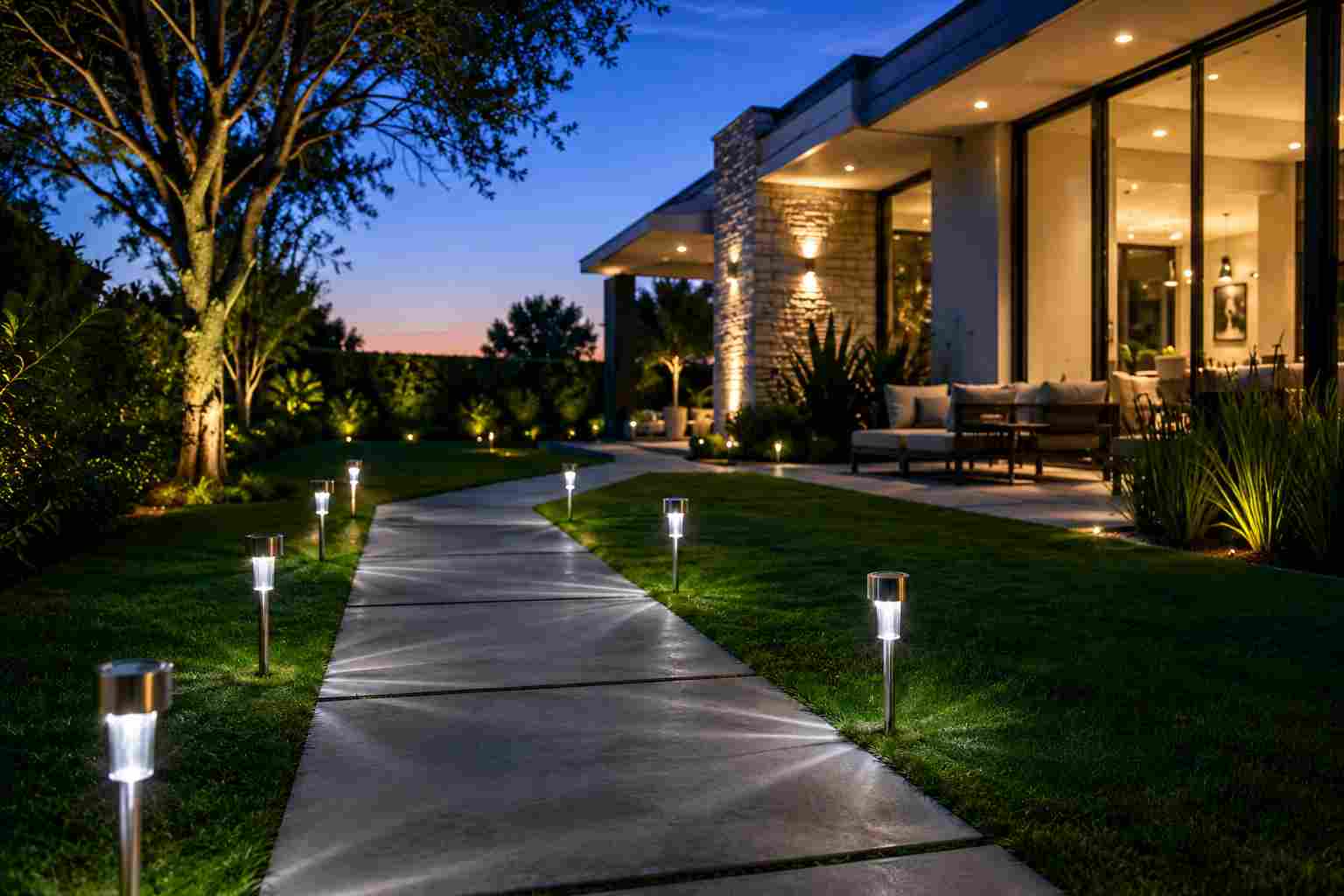
Sleek cylindrical fixtures offer a clean, contemporary aesthetic. They pair beautifully with modern architecture and geometric hardscaping.
Key features:
- Clean, minimalist design
- Warm, diffused illumination
- Contemporary architectural character
→ Shop Modern Cylinder Solar Lights
Traditional Lantern Lights
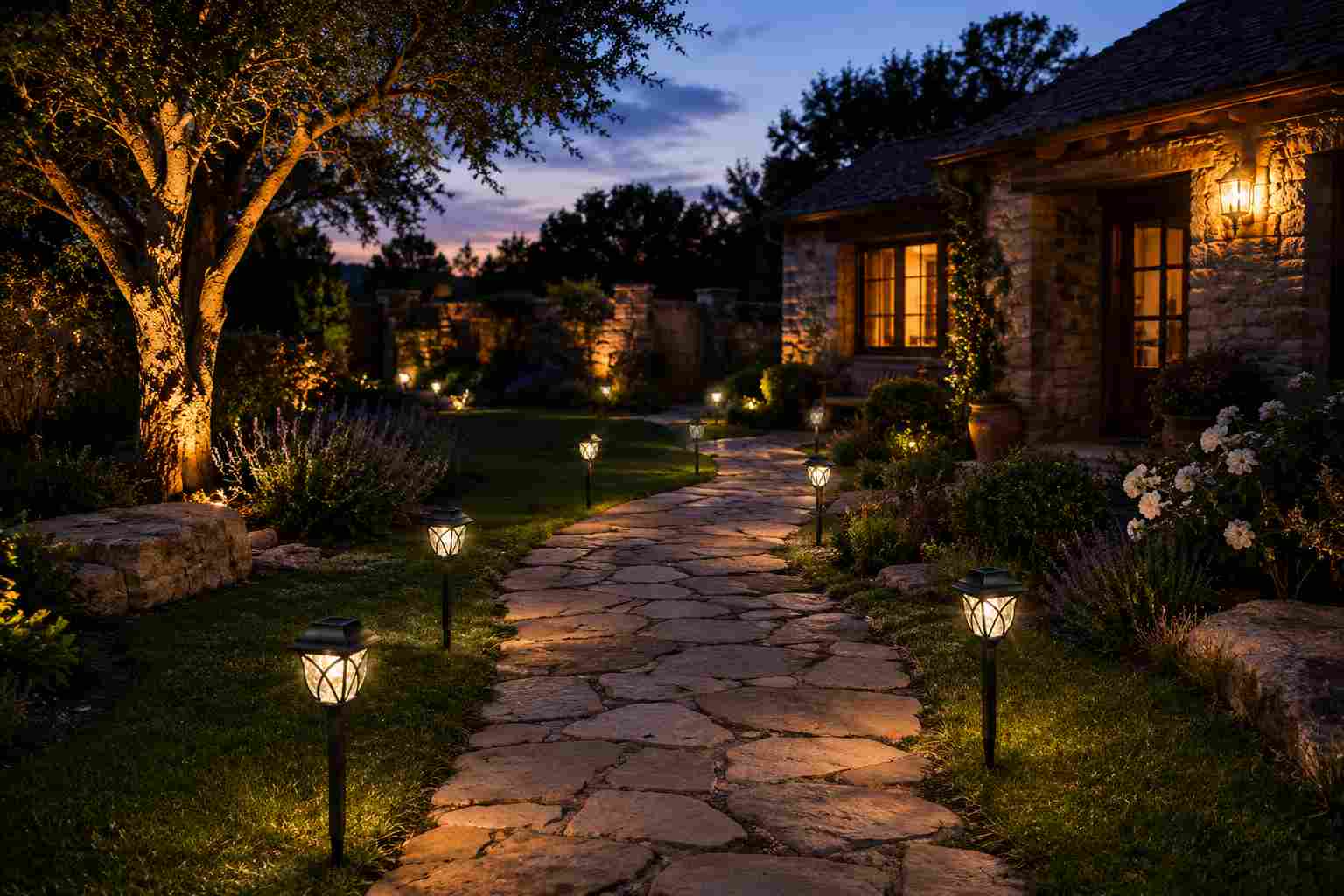
Classic lantern-style lights with decorative details and warm golden illumination. They complement natural stone paths and traditional architecture.
Key features:
- Ornate, classic design
- Warm golden glow
- Traditional architectural character
→ Shop Traditional Solar Lantern Lights
A third design direction: minimal solar bollards
Between the modern cylinder and traditional lantern styles sits a quieter option: a simple bollard that reads more like a small architectural element than a decorative garden ornament.
→ Browse the modern solar bollard light
As with any solar fixture, performance depends on real sun exposure rather than the nominal battery or lumen figure alone, so position the panel where it can charge reliably.
Layering Solar Path Lights with Other Garden Lighting
Solar path lights are rarely the only light source in a well-designed garden. Layering creates depth, safety, and extended usability.
| Layer | Purpose | Typical Fixture Type |
|---|---|---|
| Path movement | Guides walking rhythm, defines circulation | Solar pathway lights |
| Vertical drama | Creates height, anchors the garden | Spotlights |
| Stair transitions | Prevents trips, soft guidance | Step lights |
| Architectural connection | Links garden to house | Wall lights |
| Edge definition | Flush-mount, walkway boundaries | Inground markers |
| Ambient glow | Defines garden beds, low-level illumination | Linear LED strips |
When path lights, uplights, step lights, and wall lights begin working together, the garden stops behaving like separate elements. It becomes a complete outdoor environment.
For a complete guide to pathway lighting as movement architecture, see Garden Pathway Lighting. For moonlighting, see Garden Pathway Moonlighting.
Explore the complete VELUCE outdoor lighting collection →
Common Mistakes to Avoid
- Choosing cool white — ruins the evening atmosphere
- IP44 in open, rainy gardens — may fail over time; choose IP67 for exposed areas
- Spacing too far apart — dark gaps create hesitation
- Positioning lights in the path — tripping hazard
- Ignoring solar access — lights need direct sun to charge
- Over-lighting — a glowing runway feels institutional, not residential
Installation Quick Start
- Assemble lights and charge batteries fully in direct sun for 24-48 hours before first use
- Position lights 6-12 inches from path edge
- Space 6-8 feet apart for gentle rhythm
- Ensure the solar panel faces south (Northern Hemisphere) or north (Southern Hemisphere)
- Test at night — adjust spacing and angle as needed
- The path should glow. The fixtures should recede.
Maintenance
- Clean solar panels monthly with a soft, damp cloth — dust reduces charging efficiency significantly
- Replace rechargeable batteries every 2-3 years
- Check for debris or vegetation blocking the solar panel
- Store indoors during extreme winter conditions if possible
- Wipe fixtures with a damp cloth to remove pollen and dust
Frequently Asked Questions
How long do solar pathway lights last at night?
Quality solar lights provide 6-10 hours of illumination on a full charge, depending on battery capacity and sunlight exposure during the day.
Do solar pathway lights work in winter?
Yes, but with shorter runtime. Shorter daylight hours reduce charging capacity. Position solar panels for maximum winter sun exposure and expect 4-6 hours rather than 8-10.
How far apart should solar pathway lights be spaced?
Generally 4-6 feet apart for continuous illumination, 6-8 feet for accent lighting. The spacing determines whether the path reads as a continuous line or discrete pools of light.
What’s the best color temperature for solar pathway lights?
Warm white (2700K-3000K) creates an inviting, residential feel. Cooler temperatures feel clinical and institutional — avoid for garden pathways.
How do I maintain solar pathway lights?
Clean solar panels monthly with a soft cloth. Replace rechargeable batteries every 2-3 years. Check for debris blocking the panel. Store indoors during extreme winter conditions if possible.
What’s the difference between IP44 and IP67 waterproof ratings?
IP44 is splash-proof — fine for covered patios or light rain. IP67 offers protection against temporary immersion in water — better for open gardens, heavy rain, and snow.
For homeowners building complete outdoor lighting systems, our articles on Garden Pathway Lighting and Pathway Moonlighting explore other approaches to guiding movement through the garden after dark.
The finest gardens are those that guide without instructing.
The Bottom Line
Solar pathway lights have come a long way. Choose warm white (2700K-3000K) over cool white. Select IP67 for open gardens, IP44 for covered areas. Space 6-8 feet apart for gentle rhythm. Position 6-12 inches from the path edge. Clean panels monthly.
A path lit cheaply is visible. A path lit thoughtfully becomes memorable.
Plan the Path as Part of the Whole Garden
Choosing better solar fixtures improves the hardware, but the larger design question is where the path should be lit, where it should remain dark, and how it relates to planting and focal points. The Veluce Outdoor Lighting Blueprint helps you plan that whole nightscape before buying more lights.
Explore More
Browse the VELUCE shop → VELUCE Collection
Save ideas for later → VELUCE on Pinterest