Perimeter Monitoring and Security Lighting: The First Threshold
Some links may earn Veluce a commission at no extra cost to you. Purchases, delivery and returns are handled by the retailer. Affiliate disclosure.
Quick Takeaways
- The finest protection begins at the property edge, not the front door
- Perimeter security has a different job than interior security: deterrence first, detection second
- Visible cameras at the gate or driveway entrance announce protection before anyone reaches the house
- Motion-activated lighting is the single most visible deterrent — it announces that someone is watching
- AI-based detection distinguishes between humans, animals, and vehicles, eliminating false alerts
- The layered model: visible at the perimeter, invisible at the house
The Philosophy of the First Threshold
A home is not a fortress. But it is also not an open field. Somewhere between those two extremes lies the art of perimeter protection.
The finest homes do not bristle with security. But they also do not pretend vulnerability is not a concern. The resolution is layering: visible deterrence at the property edge, discreet integration closer to the house, and invisible technology inside.
Protection, at its best, is felt rather than seen.
At the perimeter, however, visibility has its own logic. A camera mounted at the gate or a motion light illuminating the driveway approach does not announce that the homeowner is afraid. It announces that the property is protected. That is a different message entirely — one of awareness rather than anxiety.
The perimeter is the first threshold. What happens there determines what reaches your front door.
The Layered Perimeter: What Belongs at Each Zone
Zone 1: The property edge (gates, fence lines, driveway entrance)
- Visible cameras
- Motion-activated flood lighting
- Gate sensors and contact alerts
- Purpose: Deterrence and early detection
Zone 2: The approach (driveway, walkways, side paths)
- Pathway lighting (always-on low level)
- Motion-activated supplemental lighting
- Cameras (can be visible or discreet depending on distance from house)
- Purpose: Track movement toward the house
Zone 3: The house exterior (doors, ground-floor windows)
- Discreet cameras (integrated into light fixtures or architecture)
- Door and window sensors
- Purpose: Document without announcing
This layered model — visible at the edge, discreet at the house — is the luxury standard. It resolves the false choice between security and aesthetics.
Perimeter Cameras: Visible Deterrence as a Feature
At the perimeter, visible cameras serve a different purpose than cameras near the house. They are not trying to disappear. They are trying to be seen — by anyone approaching.
Where visible cameras belong:
- Gate entrances (mounted on gate posts or nearby poles)
- Driveway approaches (facing incoming traffic)
- Perimeter corners where someone might enter from a neighboring property
Why visible works at the perimeter:
- Opportunistic intruders choose easier targets
- A camera that announces itself changes behavior before a threat develops
- Visible cameras at the gate signal that the property is not anonymous
The design consideration: Visible does not mean ugly. Choose housings that match the architecture — black or dark bronze for modern gates, weather-resistant finishes that do not corrode. The camera should be unmistakably a camera but also unmistakably well integrated.
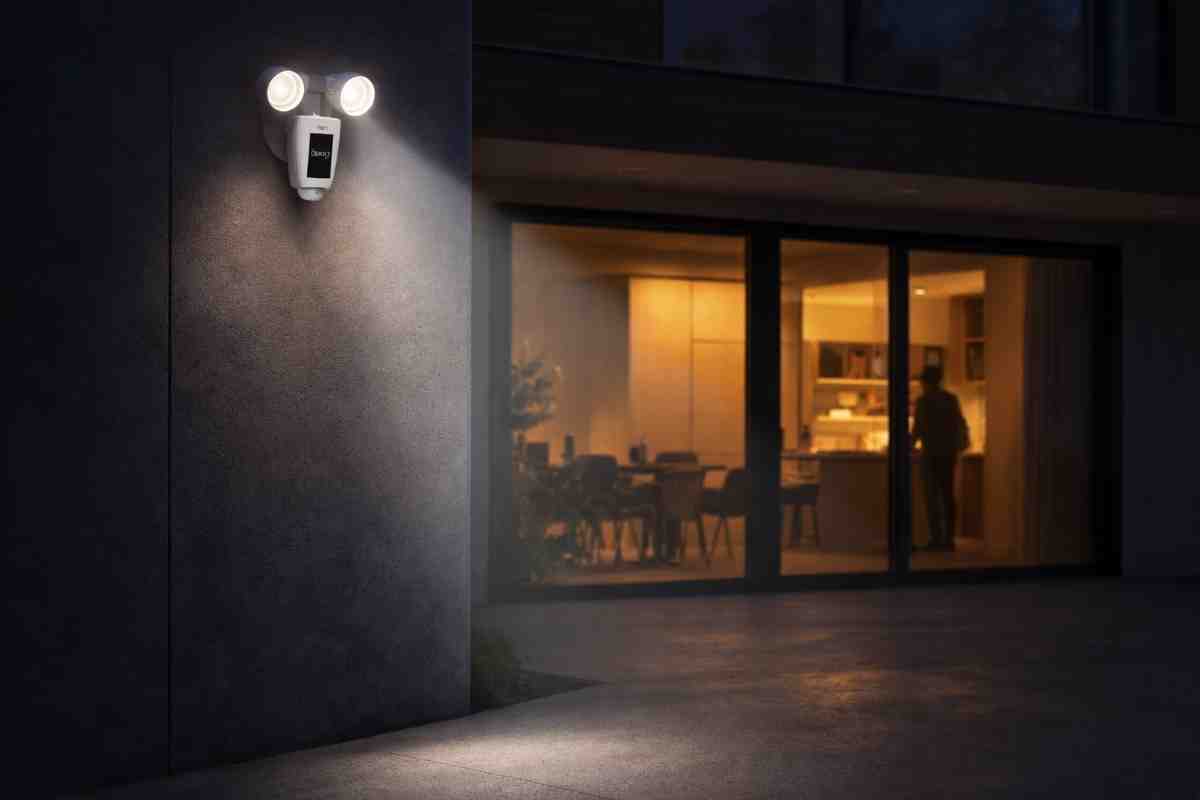
For those seeking an integrated floodlight and camera in a single fixture, the Ring Floodlight Cam Wired Plus combines motion-activated 1080p HD video with 2000-lumen LED floodlights. When motion is detected, lights illuminate and recording begins — a coordinated response that requires no separate components. Two-way talk and a built-in security siren add response options, while real-time mobile alerts keep you informed from anywhere.
Security Lighting: The Most Visible Deterrent
A motion-activated light is simple technology. It is also the single most effective visible deterrent at the perimeter.
Why motion lighting works:
- It announces detection instantly — the light is the alert
- It removes the掩护 of darkness
- It activates surveillance cameras (better illumination means better footage)
- It signals to anyone approaching that the property is not sleeping
The luxury refinement: Do not rely solely on motion-activated flood lights. Layer them with always-on low-level pathway lighting. The contrast between ambient path light and sudden flood illumination is the signal. Someone approaching experiences: I am being watched.
Placement principles:
- Gate approaches (illuminating both the gate and anyone approaching it)
- Driveway entrances (covering the first 50-100 feet of the drive)
- Side gates and service entrances (often the most vulnerable points)
- Dark corners where fence lines meet
Technical considerations:
- LED fixtures (instant-on, no warm-up delay)
- Adjustable sensitivity to avoid false triggers from animals or branches
- Photocell integration (lights only activate after dark)
- Integration with cameras (light triggers recording)
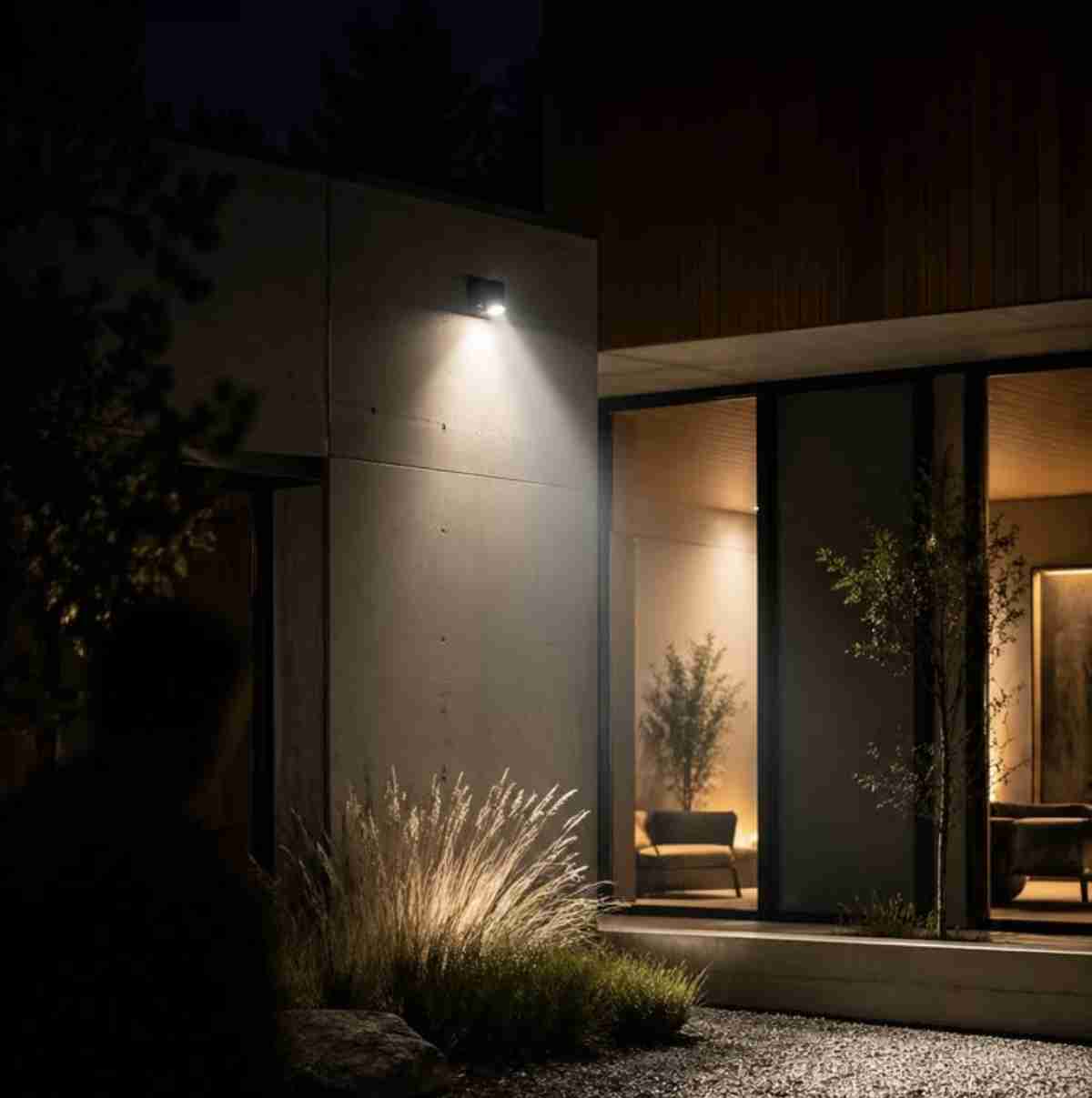
For perimeter pathways, driveways, and dark corners, the Aootek Solar Motion Sensor Lights offer a wire-free solution with 120 LEDs and a 270° wide angle. Three selectable modes (motion sensor only, permanent low-level on, or smart brightness control) allow you to dial in the exact behavior each zone requires. IP65 waterproofing ensures reliable operation in any weather, and the solar panel eliminates wiring entirely — ideal for properties where running low-voltage cable is impractical.
Motion Detection: From Simple to Smart
Traditional motion detection triggers on movement — any movement. A deer, a branch in the wind, a neighbor’s cat, headlights sweeping across the driveway. All of these cause false alerts.
AI-based detection distinguishes between:
- Humans
- Animals
- Vehicles
Why this matters: False alerts are not harmless. They train you to ignore notifications. When every alert is a false alarm, the real alert goes unnoticed. AI detection dramatically reduces false positives, making the system trustworthy.
What to look for:
- Person detection (distinguishes human shapes from animals)
- Vehicle detection (car, truck, bicycle)
- Activity zones (ignore movement beyond your property line)
- Sensitivity adjustment (reduce tree branch triggers)
Sensors Beyond Cameras and Lights
Cameras and lights are the visible layer. Beneath them, sensors provide detection without announcement.
Gate and fence sensors:
- Magnetic contacts (detect when a gate opens)
- Vibration sensors (detect climbing or cutting)
- Buried cable sensors (detect footsteps across a perimeter)
Window and door sensors on outbuildings:
- Garages, sheds, pool houses, guest cottages
- Often overlooked but equally vulnerable
Driveway sensors (buried or beam):
- Detect vehicles approaching long before they reach the house
- Ideal for long driveways or rural properties
- Can trigger lights, cameras, and interior alerts
The integration principle: Sensors should trigger cameras and lights. A gate opening should activate the nearby camera and illuminate the approach. These systems should not operate in isolation.
A practical three-layer perimeter kit
A useful starting point is to combine one visual layer, one lighting layer, and one early-warning layer rather than asking a single device to do everything.
- → Browse the outdoor PoE camera — a wired surveillance option; verify the current ONVIF, weather-rating, lens, storage, and recorder compatibility before purchase.
- → Browse the 12V motion floodlight — a low-voltage lighting layer for dark perimeter zones.
- → Browse the wireless driveway motion alarm — useful as an early-warning layer for gates, long approaches, and driveways where camera footage alone may not prompt immediate attention.
Integration: The Coordinated Perimeter
A gate sensor detects opening at 10:15 PM. What happens next?
Basic response: An alert is sent to your phone.
Coordinated response:
- The gate-area flood light illuminates
- The perimeter camera begins recording (or sends a clip to the cloud)
- An interior chime sounds (audible alert inside the house)
- A notification is sent to your phone with a clip
- If the system is professionally monitored, an operator views the camera feed
This is not automation for automation’s sake. This is the property responding to a potential threat in real time, without requiring you to watch every alert.
Lighting Design for Security and Beauty
Security lighting does not have to be harsh. The finest perimeter lighting serves two masters: deterrence and atmosphere.
The layered lighting approach:
- Ambient (low-level path lighting): Always on after dark. Defines walkways, creates orientation, reduces the stark contrast that hides threats.
- Accent (grazing light on walls, gates, landscaping): Creates depth, eliminates shadow pockets, makes the property feel inhabited.
- Motion-activated flood: The response layer. Bright, broad, unmistakable.
The dark sky consideration: Aim lights downward. Shield fixtures to prevent light trespass onto neighboring properties. The goal is illumination of your property, not the night sky.
Color temperature: 2700K-3000K (warm white) for path and accent lighting. 4000K-5000K (cool white) for motion-activated flood lights — the cooler temperature feels more alert, more clinical, more detected.
Professional Monitoring: The Human Layer
Technology detects. Humans respond. Professional monitoring services provide 24/7 oversight of your perimeter systems.
What professional monitoring includes:
- Real-time alert response (not just logging events)
- Verification (operator views camera feed to confirm threat)
- Dispatch to local emergency services
- Coordination with you (call or text before dispatching)
When it is essential:
- Primary residences where you travel frequently
- Weekend or seasonal homes (you cannot watch alerts constantly)
- Large properties where response time from local police is significant
- Properties with valuable art, collections, or high-profile occupants
When self-monitoring may suffice:
- Small urban properties with quick police response
- Homes where someone is always present
- Remote properties with good cell service and a willingness to respond personally
Common Mistakes in Perimeter Security
- Treating perimeter the same as interior — Visible deterrence belongs at the edge. Discreet integration belongs at the house. Do not reverse this.
- Relying only on cameras without lighting — A camera in darkness captures nothing useful. Light is not optional.
- Motion lights that trigger constantly — False alerts train you to ignore the system. Adjust sensitivity or upgrade to AI detection.
- Blind spots at the property edge — Walk your perimeter at night. The gaps will reveal themselves.
- Forgetting side and rear approaches — Most driveways are covered. Most break-ins happen elsewhere.
- Ignoring integration — A sensor that does not trigger a camera or light is half a system.
- Choosing visible cameras that look like industrial surveillance — Visible does not mean ugly. Well-designed housings exist.
Decision Framework: Your Perimeter, Layered
Urban property (small lot, close neighbors):
- Visible cameras at front entry and alley/side gate
- Motion-activated lighting at all doors
- Window and door sensors on ground floor
- Self-monitoring may suffice
Suburban property (quarter to half acre):
- Visible cameras at driveway entrance and all gates
- Layered lighting (ambient path + motion flood)
- AI-based motion detection to reduce false alerts
- Professional monitoring recommended
Rural or large property (multiple acres, long driveway):
- Buried or beam driveway sensors (vehicle detection)
- Visible cameras at property entrance and house
- AI detection essential (wildlife triggers otherwise)
- Professional monitoring strongly recommended
- Consider cellular backup (rural internet may fail)
Seasonal or weekend home:
- Professional monitoring essential (you are not always there)
- Battery-backed systems (power may be less reliable)
- Remote access via app (check in from anywhere)
- Interior motion sensors (detect breach after perimeter failure)
The Bottom Line
The perimeter is the first threshold. What happens at the property edge determines what reaches your front door.
Visible cameras and motion-activated lighting at the gate or driveway entrance do not announce fear. They announce awareness. They tell anyone approaching: This property is protected. Choose somewhere else.
Layered with discreet cameras near the house and invisible sensors at openings, perimeter security creates a graduated response. The farther someone moves toward your home, the more the property reveals that it is watching.
The finest homes are not defined by the technology they display,
but by the technology they allow you to forget.
At the perimeter, however, a little visibility is not a compromise. It is the first line of a conversation you hope never happens — but are prepared to finish.
Explore More from VELUCE
Frequently Asked Questions
How many perimeter cameras do I need?
This depends entirely on property layout, not square footage. Every approach path, gate, and ground-floor entry point needs coverage. Blind spots are vulnerabilities. A professional site assessment is the only reliable way to determine optimal placement.
Is motion-activated lighting effective for security?
Yes. Motion lights are the single most visible deterrent at the perimeter. They announce detection instantly. For luxury properties, consider layering always-on low-level path lighting with motion-activated flood zones — the contrast is the signal.
What’s the cost of a comprehensive perimeter system?
Basic systems start at $2,000-$5,000. Comprehensive systems with professional monitoring, AI-based detection, and integrated lighting can exceed $10,000-$20,000. The variable is not just equipment but property size, entry points, and desired integration depth.
Should perimeter cameras be visible or discreet?
At the perimeter, visible cameras serve as psychological deterrents. Unlike cameras near the house (which many homeowners prefer to conceal), perimeter cameras announce that the property is protected. This layered approach — visible at the edge, invisible at the house — is the luxury standard.
What’s the difference between motion detection and AI-based detection?
Standard motion detection triggers on any movement — animals, branches, headlights. AI-based detection distinguishes between humans, vehicles, and animals, dramatically reducing false alerts. For large or rural properties, AI is essential.
Can perimeter lighting integrate with other home systems?
Yes. Perimeter lighting can trigger security cameras to begin recording, send alerts to your phone, or integrate with access control systems. When someone approaches the gate, lights can illuminate, cameras can record, and you can receive a notification — all before they reach the front door.
Do I need professional monitoring?
Professional monitoring provides 24/7 oversight and emergency dispatch. For primary residences, it is strongly recommended. For weekend or seasonal homes, it is essential — you cannot watch alerts constantly. For remote properties with good cell service, monitored self-response may suffice.
Turn the Security Plan into a Buying Brief
Perimeter systems often combine cameras, lighting, sensors, access control and professional installation. The Veluce Room Procurement System helps you compare products against real site constraints, capture compatibility and installation requirements, and avoid buying components that do not work together.
Explore More
Browse the VELUCE shop → VELUCE Collection
Save ideas for later → VELUCE on Pinterest