LED Strip Lighting for Outdoors: Voltage, Placement, and Which One to Buy
Some links may earn Veluce a commission at no extra cost to you. Purchases, delivery and returns are handled by the retailer. Affiliate disclosure.
Quick Takeaways
- Outdoor LED strips need IP65 or higher — indoor strips will fail
- COB (Chip-on-Board) produces seamless light with no visible dots
- 220V strips need an electrician but run up to 50 meters without voltage drop
- 12V/24V strips are DIY-friendly with a plug-in transformer
- Solar strips need no wiring but depend on direct sunlight
- Never install strips on stair treads — they will be crushed. Use step lights instead.
The Three Questions You Must Answer First
Before buying any LED strip, answer these three questions. Most mistakes happen when people skip this step.
1. Do you have power nearby?
| Your situation | Go to this product |
|---|---|
| No power source nearby (remote garden, shed, rental property) | Solar SMD strip |
| Yes, and hiring an electrician (new build, major renovation) | 220V COB strip |
| Yes, and have an outdoor outlet (DIY) | 12V/24V DC COB strip |
2. Will the strip be visible or hidden?
- Visible (under rail, stair riser, pergola beam) → COB only (no dots)
- Hidden (inside channel, under bench, behind fascia) → SMD is acceptable
3. Will the strip get wet?
- Rain only → IP65
- Direct hose spray or splashing → IP67
- Pond or water feature → IP68 (not covered in this guide)
The Three LED Strip Types for Outdoor Use
Most of what you see online is indoor strip repurposed for outdoor use. These three are actually built for exterior conditions.
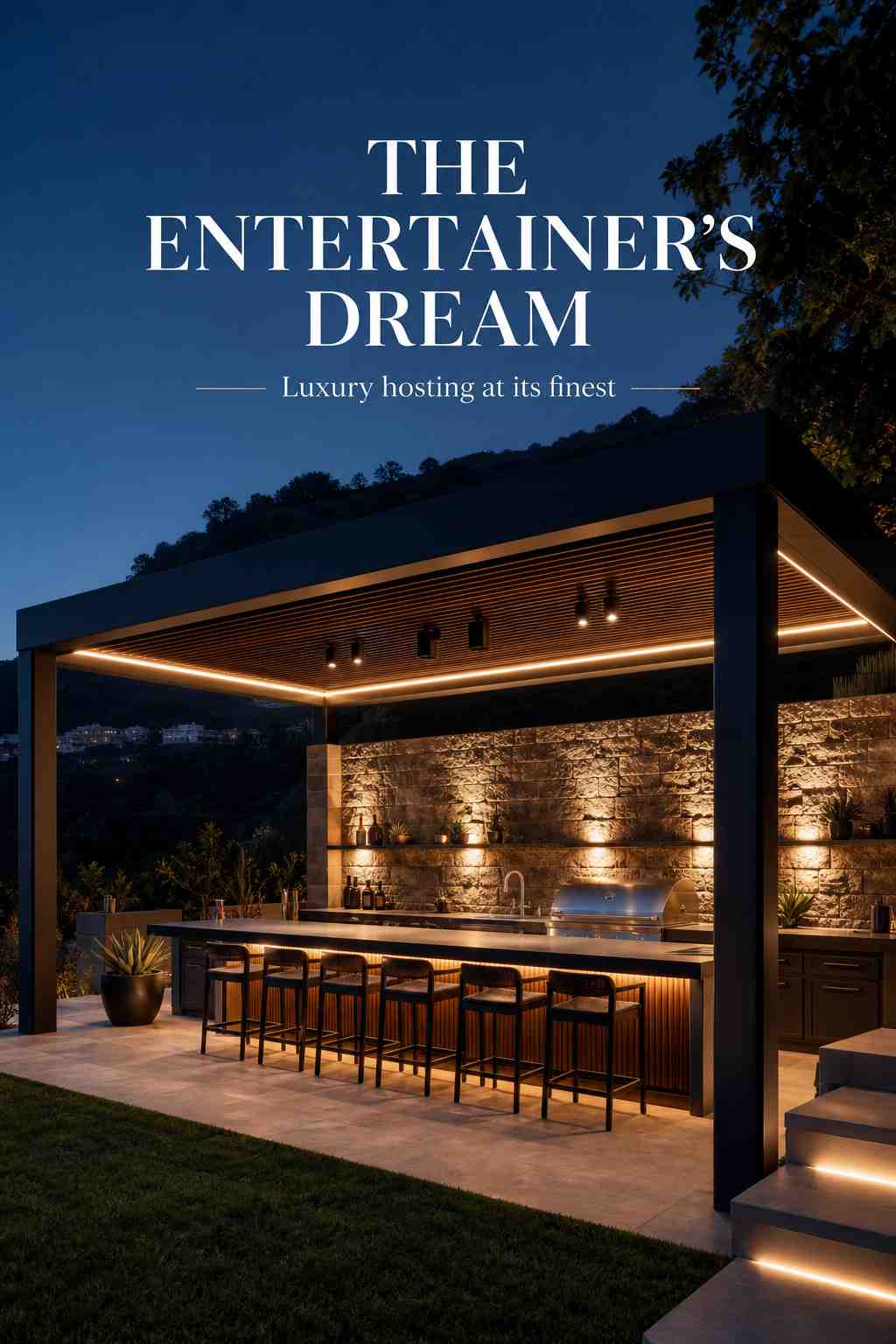
1. 220V COB Strip — Professional Permanent Installation
This is what designers specify for new builds and major renovations. The strip runs directly on mains voltage — no transformer, no power injection points, and runs up to 50 meters without brightness loss.
Best for: New decks, pergolas, and facades where you’re already hiring an electrician
Why it works:
- COB (240 LEDs/m) creates seamless light — no visible dots
- 220V direct means no transformer box to hide
- IP67 waterproof — rain, snow, and hose spray are fine
- Tunable white from 2700K to 6500K (keep it at 2700K-3000K)
- WiFi app control with Tuya (works with Alexa and Google Home)
The catch: You need an electrician. This is not a DIY product.
→ Shop 220V Smart COB LED Strip on AliExpress
2. 12V/24V DC COB Strip — DIY Permanent Installation
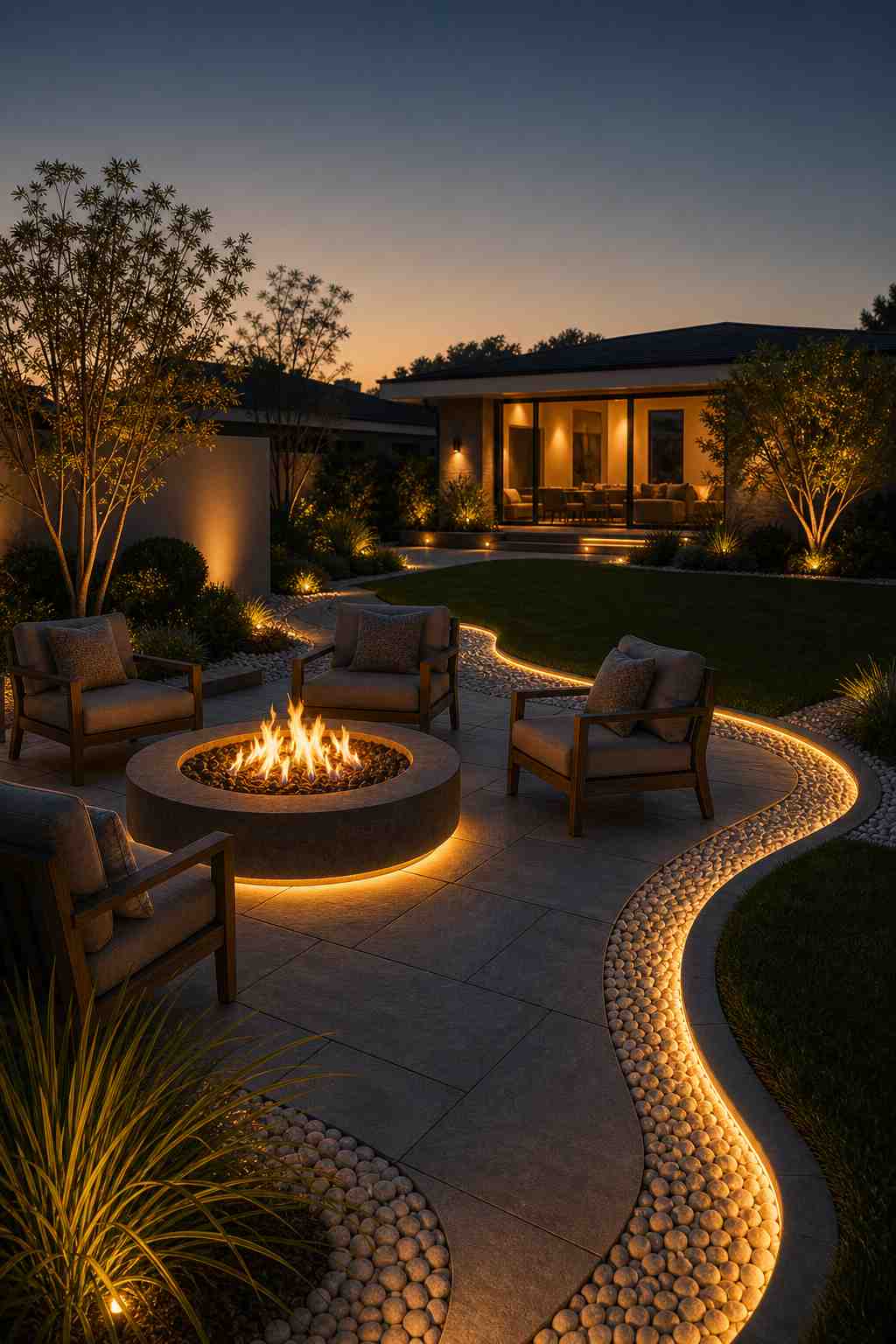
Same COB technology as the 220V version, but runs on low voltage. You plug a transformer into any outdoor outlet, then connect the strip. No electrician required.
Best for: Existing decks with outdoor outlets, DIY homeowners
Why it works:
- 480 LEDs/m — even denser than the 220V version
- COB technology — zero visible dots
- IP67 waterproof
- Adhesive backing included (220V has none)
- Cut every 2.5cm (12V) or 5cm (24V) for custom lengths
The catch: Voltage drop limits run length. 24V runs up to 10 meters from one end. Longer runs need power at both ends. If your total run exceeds 10 meters, connect power to both ends of the strip to ensure the end of the line is just as bright as the beginning.
→ Shop 12V/24V DC COB LED Strip on AliExpress
3. Solar SMD Strip — No Wiring, No Outlet
For areas where running power is impractical — a remote garden pergola, a shed, or a rental property where you can’t modify the electrical system.
Best for: Areas with no power, renters, temporary installations
Why it works:
- 24V battery + solar panel — stake the panel, stick the strip
- 4-5 hour charge → up to 20-30 hours of runtime under optimal conditions (direct sun, warm weather, clean panel). Expect less in winter or shaded locations.
- 8 lighting modes including steady on and fading effects
- IP67 waterproof
- Adhesive backing for easy installation
The catch: SMD chip (not COB) means visible dots if the strip is exposed. Use this where the strip is hidden or for accent lighting only. Also needs direct sunlight — shaded areas won’t fully charge.
→ Explore Solar LED Strip on AliExpress
Check the current power, weather rating, length and availability against your installation before choosing a kit.
Where to Install LED Strips (And Where to Avoid)
LED strips excel in specific locations. Use them here:
| Location | Why It Works |
|---|---|
| Under cap rails | Lights the deck surface from above — invisible from seating view |
| Stair risers (vertical face) | Creates floating tread effect — safe and dramatic |
| Under bench seats | Grazes the deck surface below |
| Inside aluminum channels | Protects strip and diffuses light. Aluminum channels also improve heat dissipation and protect the strip from accidental impact, extending its lifespan. |
| Along pergola beams | Defines overhead structure |
| Behind outdoor kitchen fascia | Indirect accent lighting |
Three Places You Should NOT Use LED Strips
Knowing when to say no to a strip is more important than knowing where to put one.
1. On stair treads (the horizontal surface you step on)
Strips will be crushed, kicked, and destroyed within weeks. The adhesive fails, the silicone tears, and water gets in. Instead, use solar step lights mounted on the vertical riser or side of the tread.
→ Shop Solar Step Lights on AliExpress
2. On ground-level pathways
Same problem as stairs — foot traffic destroys them. Even with aluminum channel covers, dirt and debris collect in the channel. For walking surfaces themselves, use flush-mount ground lights. Protected pebble trenches positioned beside pathways can work, provided the strips remain isolated from foot traffic.
→ Shop Solar Ground Lights on AliExpress
3. On walls without a channel or diffuser
SMD strips (including the solar version) look terrible exposed — visible dots and uneven light. COB strips look better but still benefit from a channel. Instead, use dedicated wall lights for architectural grazing. See our complete guide to Upward Lighting: The Art of Architectural Grazing.
→ Shop Solar Wall Lights on AliExpress
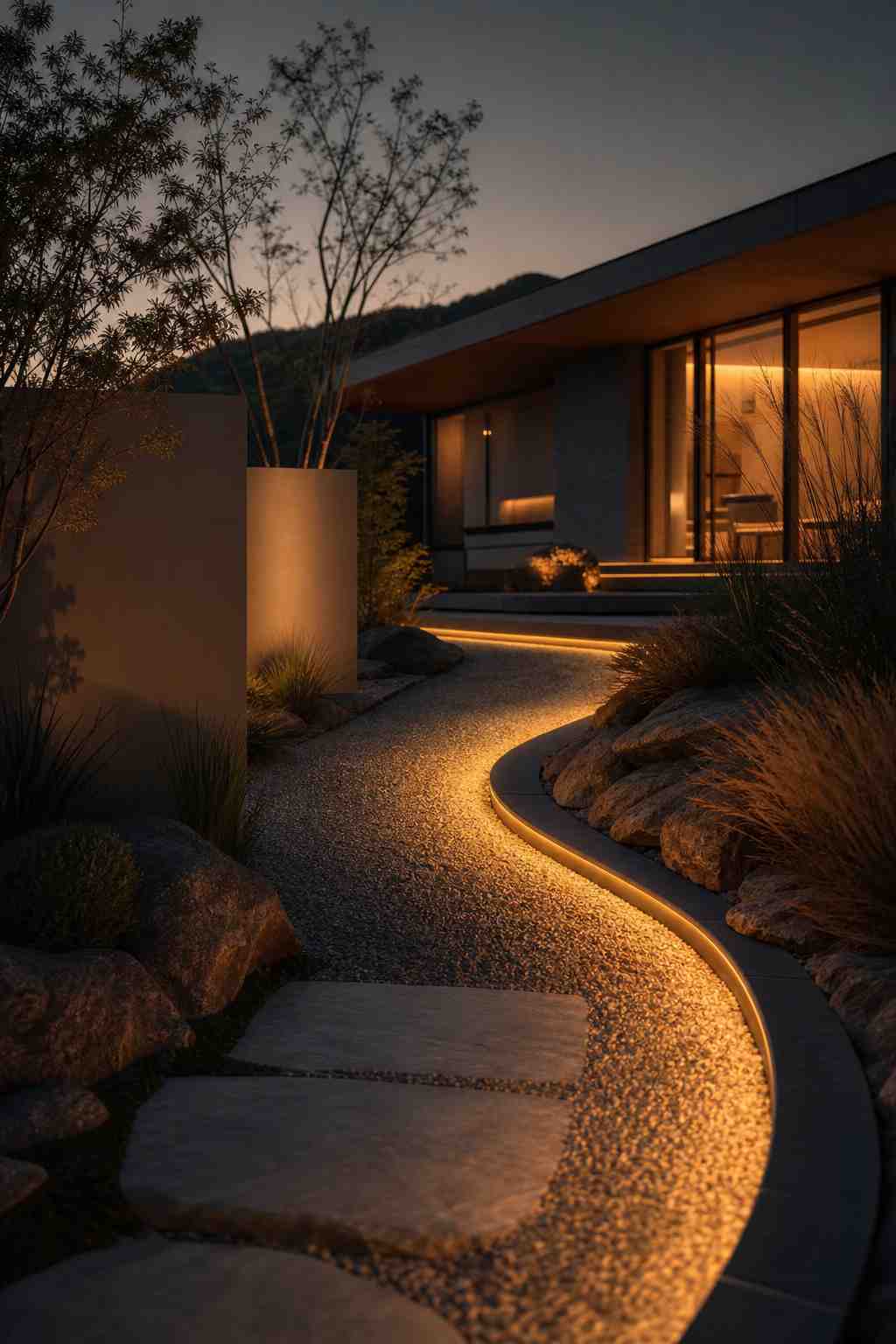
COB vs SMD: The Dot Problem Explained
This is the single biggest difference nobody explains.
| COB (Chip-on-Board) | SMD (Surface-Mount Device) | |
|---|---|---|
| Visible dots | None — continuous light line | Yes — individual LEDs visible |
| Best for | Exposed installations (under rails, stair risers) | Hidden installations (inside channels, behind facias) |
| LED density | 240-480 LEDs/m | 60-120 LEDs/m |
| Thickness | Thin (9.5×5mm silicone tube) | Thin to medium |
| Available in solar? | No | Yes |
Bottom line: If the strip is visible, buy COB. If it’s hidden, SMD is fine and often cheaper.
IP65 vs IP67: What Waterproofing Actually Means
| Rating | What it survives | Where to use |
|---|---|---|
| IP65 | Low-pressure water jets, rain, hose spray | Covered decks, under eaves, most outdoor applications |
| IP67 | Temporary immersion up to 1 meter | Steps, ground-level, areas with pooling water |
| IP68 | Continuous immersion | Ponds, fountains (not covered here) |
While outdoor LED strips should have a minimum IP65 rating, all three strips featured in this guide are IP67 for additional protection. The step lights, ground lights, and wall lights are IP65 — fine for rain but don’t submerge them.
Voltage Decision Tree
If you’re overwhelmed by choices, follow this path:
Start here: Do you have power nearby?
| Your situation | Go to this product |
|---|---|
| No power source nearby (remote garden, shed, rental property) | Solar SMD strip — no wiring, but expect visible dots and seasonal variation |
| Yes, and you’re hiring an electrician anyway (new build, major renovation) | 220V COB strip — longest runs, no transformer, professional result |
| Yes, you have an outdoor outlet and want to DIY | 12V/24V DC COB strip — safest choice for most homeowners |
Still unsure? Here’s the short version:
- For most homeowners, a 12V/24V DC COB strip offers the best balance of simplicity, appearance, and flexibility. No electrician needed. No visible dots. Covers most deck rails (up to 10 meters).
- Need more than 10 meters? Hire an electrician and get the 220V COB strip.
- No power nearby? Solar SMD strip — just know it needs direct sun and has visible dots.
One more thing: If your project involves stair treads, ground-level paths, or walls without a channel, scroll up to “Three Places You Should NOT Use LED Strips.” You probably need step lights, ground lights, or wall lights instead.
Installation Quick Start
For 12V/24V strips:
- Clean surface with isopropyl alcohol (adhesive won’t stick to dust)
- Plan your transformer location (must be within 1.5m of outlet)
- Test strip before peeling adhesive
- Peel and press firmly along entire length
- Add mounting clips every 30cm for permanent security
For solar strips:
- Position solar panel for maximum direct sunlight:
- Northern Hemisphere → south-facing
- Southern Hemisphere → north-facing
- Keep panel wire runs under 5 meters
- Fully charge before first use (24-36 hours in sun)
Tools needed:
- Isopropyl alcohol and clean rag
- Scissors (for cutting strips at marked lines)
- Soldering kit or quick-connect clips (for corners)
- Waterproof junction box (for connections)
- Mounting clips (adhesive alone will fail eventually)
Layering Outdoor Lighting
A single strip is rarely enough. Complete outdoor lighting combines multiple layers:
| Layer | Product | Purpose |
|---|---|---|
| Deck/pergola lighting | 220V smart COB or 12V/24V DC COB | Defines structure, creates ambience |
| Stair safety | Solar step lights | Prevents trips, soft guidance |
| Path definition | Solar ground lights | Flush-mount, walkway edges |
| Tree and shrub uplighting | Solar spotlights | Adds depth beyond the deck |
| Wall grazing (optional) | Solar wall lights | Connects deck to house architecture |
For a complete guide to facade lighting, see our article on Upward Lighting: The Art of Architectural Grazing.
Common Installation Mistakes
| Mistake | Why It Fails |
|---|---|
| Using indoor strip outdoors | Fails in first rain — no IP rating |
| SMD strip exposed on rail | Visible dots look cheap and unfinished |
| 220V DIY installation | Dangerous — requires licensed electrician |
| Solar strip in shaded area | Never fully charges, dim or dead at night |
| Strip on stair tread | Crushed within weeks |
| No strain relief on connections | Wires pull out over time |
| Wrong color temperature (cool white) | Harsh, clinical, uninviting |
Maintenance and Longevity
| Strip type | Expected life | Maintenance |
|---|---|---|
| 220V COB | 25,000-35,000 hours (10-15 years) | Wipe dust annually |
| 12V/24V COB | 25,000-35,000 hours (10-15 years) | Wipe dust annually |
| Solar SMD | LED: 25,000-35,000 hours / Battery: 2-3 years | Clean solar panel monthly |
All three are IP67 waterproof, but connections are vulnerable. Use waterproof junction boxes or heat-shrink connectors for permanent installations.
Frequently Asked Questions
Can I use any LED strip outdoors?
No. Outdoor strips need a minimum IP65 waterproof rating. Standard indoor strips will fail in rain, humidity, or even morning dew.
What’s the difference between COB and SMD LED strips?
COB produces a continuous line of light with no visible dots between LEDs. SMD strips have visible gaps. For exposed installations like under railings, always choose COB.
Do I need an electrician for LED strip installation?
For 220V strips — yes. For 12V/24V DC strips and solar strips — no, they are DIY-friendly with plug-in transformers or solar panels.
How long do outdoor LED strips last?
Quality strips last 25,000-50,000 hours. That’s 10-20 years of evening use. Solar strips depend on battery health, typically 2-3 years before replacement.
Can I cut LED strips to length?
Yes — all three strips in this guide are cuttable. 220V and 12V/24V COB strips cut every 50cm or 25cm. Solar SMD strips cut every 5cm.
What color temperature should I choose for outdoor lighting?
Warm white (2700K-3000K) creates an inviting, residential feel. Natural white (4000-4500K) works for task lighting. Avoid cool white (6000K+) for social spaces.
Can LED strips be installed on stairs?
Not on the tread surface — they will be crushed. Install them on stair risers (vertical face) or use dedicated step lights instead.
Do solar LED strips work in winter?
Yes, but with shorter runtime. Shorter daylight hours and lower sun angles reduce charging. Position the solar panel for maximum direct sunlight.
Can I connect multiple LED strips together?
For 12V/24V strips, yes — but each connection adds resistance. For runs over 10m, use a power injector or feed from both ends. For 220V strips, an electrician must handle all connections. Solar strips cannot be daisy-chained.
For homeowners drawn to timeless materials, our article on Copper Lanterns That Age With Grace explores another approach to exterior lighting design.
The Bottom Line
Start with the three questions at the top of this guide:
- Do you have power nearby?
- Will the strip be visible or hidden?
- Will it get wet?
For most homeowners, a 12V/24V DC COB strip offers the best balance of simplicity, appearance, and flexibility. No electrician required. No visible dots. Ten meters covers most deck rails and pergolas.
Need more than 10 meters? Hire an electrician and buy the 220V COB strip. Longer runs, no transformer to hide, and the same seamless COB light.
No power nearby? The solar SMD strip works — but understand the trade-offs: visible dots, seasonal variation, and direct sun required.
And when a strip is the wrong tool? Buy step lights for stairs. Ground lights for paths. Wall lights for facades.
“The right tool for the right place.”
In outdoor lighting, restraint and precision always outperform enthusiasm and excess.
Shop LED strips:
Make the LED Strip Part of the Whole Nightscape
Choosing the right strip solves one detail. The Veluce Outdoor Lighting Blueprint helps you decide how that detail should work with steps, paths, planting, seating and focal points across the entire outdoor space — so the effect is planned before more fixtures are purchased.
Explore More
Browse the VELUCE shop → VELUCE Collection
Save ideas for later → VELUCE on Pinterest